Stop the Decoration Loop: Why Your Home Never Quite Feels Finished
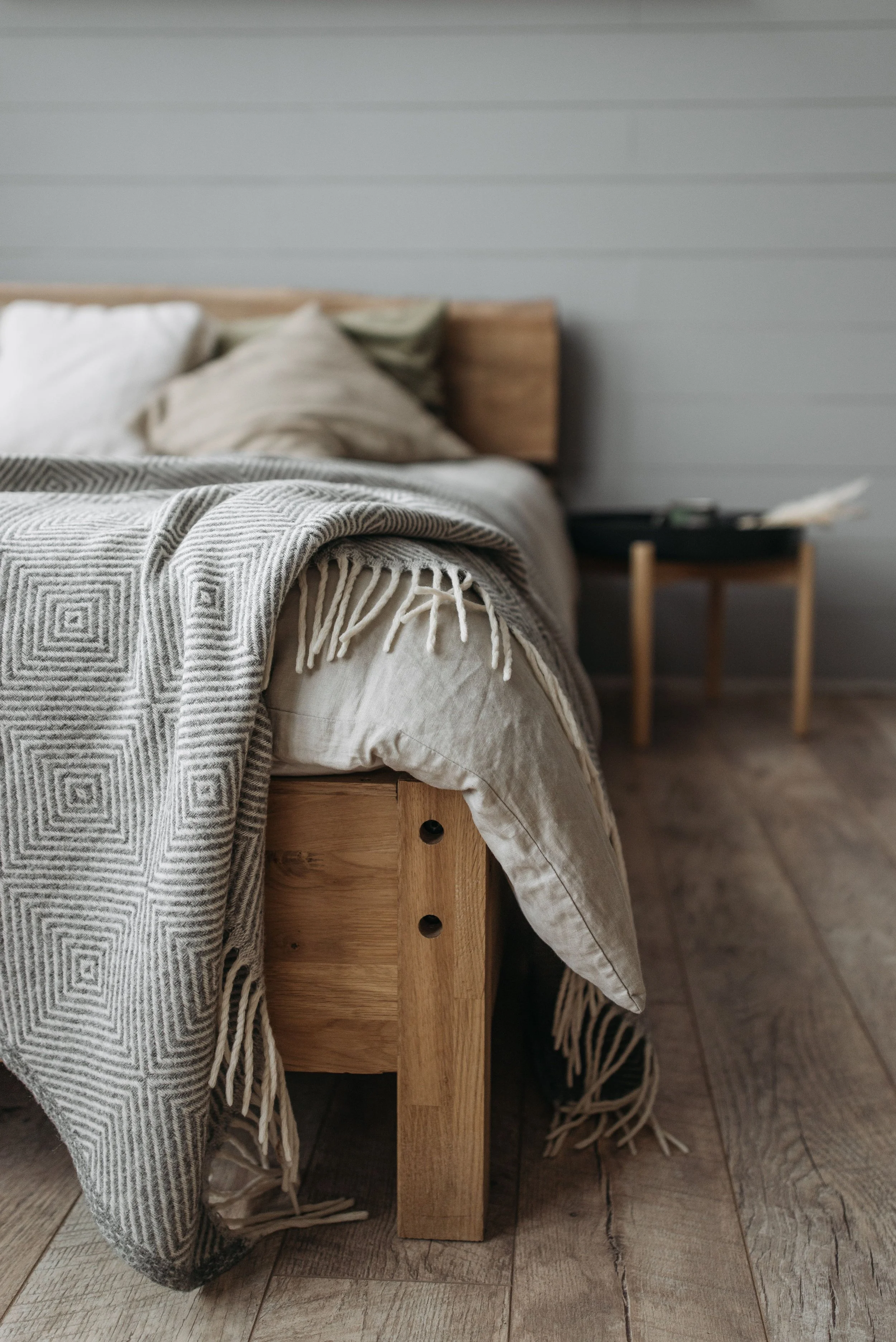
You walk into your bedroom. Something feels off. You sleep fine, but you never quite exhale when you enter the room. It never becomes the sanctuary you imagined. So you paint the walls.
It still doesn't feel right.
You rearrange the furniture. You buy a new bedside table. You bring in plants. You adjust the lighting.
Six months later, you're still restless.
A year later, you're still not satisfied.
You're likely stuck in what I call the Decoration Loop.
What Is the Decoration Loop?
The Decoration Loop happens when you know something feels off, but you don't know why.
So you begin solving the problem the only way you know how: by changing what you can see.
You scroll Pinterest. You save Instagram posts. You hope the next change will finally make the room feel the way you imagined.
Sometimes it helps.
Often it doesn't.
Not because you have bad taste.
Not because you lack design skills.
But because you're treating symptoms instead of understanding the cause.
Why the Loop Keeps Going
Your intuition is telling you something is off. That's real. But intuition alone doesn't tell you what is wrong or how to fix it.
You redecorate based on aesthetics, trends, or what you think should work. Maybe you get lucky and something sticks. But most of the time? You're just cycling through options, hoping one of them will finally make the space feel balanced.
This can go on for years.
My Own Decoration Loop
When my husband and I moved into our home five years ago, I did what most people do. I started adjusting immediately.
The kitchen didn't feel quite right. So I changed things. And changed things again. The bedroom had a similar problem. I repainted. I bought a new mattress and bed frame. I brought in different elements. Nothing quite landed.
I spent an entire year doing this, tinkering, adjusting, hoping something would click. All while trusting my intuition that something needed to shift.
Then, after that first year, I finally took a moment to map my own home’s Flying Stars. Something I knew I should have done right away but never made the time.
And as suspected, everything made sense.
My bedroom and kitchen both contain the 2-5 star configuration, the most challenging combinations to balance. No wonder I was stuck in a loop. I was adjusting based on intuition and aesthetics, but I wasn't addressing what those sectors actually needed elementally.
Once I knew the stars, my adjustments became purposeful instead of random. Instead of "this might work," it became "this is what the configuration requires."
That was four years ago. I'm still refining those spaces because balancing a 2-5 is an ongoing process. But I'm no longer guessing. I'm diagnosing and adjusting with intention.
The Difference: Guessing vs. Diagnosing
Here's what happens in the decoration loop:
You feel: Something is off.
You guess: It must be the color. Or the furniture. Or the lighting.
You try: Paint, new curtains, rearrange.
You wait: Does it feel better?
If not: Repeat.
Here's what happens with Flying Stars:
You feel: Something is off.
You diagnose: What are the stars in this sector? What elements are present? What's the imbalance?
You understand: This sector needs X element and is getting flooded with Y.
You adjust: Strategically, purposefully, with intention.
You move forward: Not guessing. Not hoping. Knowing.
The first approach might eventually work. If you're patient enough and willing to spend years tinkering, you might stumble onto something that feels right.
The second approach gets you there faster. It eliminates the trial and error. It stops the endless cycle of redecorating in search of a feeling you can't quite name. And you likely end up with more money in your checking account and time to enjoy with your family.
What About Doing It Yourself?
You might be thinking: "Can't I just learn the stars myself and diagnose my own home?"
Sure. You can learn about Flying Stars. You can map your home's configuration.
But here's what I find: When you're living in the space, it's harder to see clearly. You're inside the problem. You're affected by it. Your intuition, which is real and valuable, gets tangled up in your hope that this adjustment will finally work.
An outside perspective sees things you've stopped noticing. Patterns you've gotten used to. Imbalances you're no longer even aware of because you've adapted to them.
More importantly, knowing the stars is one thing. Knowing what to do about them is another.
The diagnosis and the treatment aren't the same skill.
The Hidden Cost of the Decoration Loop
Every month you spend redecorating without a diagnosis, you're:
Spending money on things that might not address the actual problem
Spending emotional energy on hope and disappointment
Living in a space that doesn't feel right
Adapting to an imbalance instead of addressing it
What could shift if you stopped guessing and started diagnosing?
What if the room that's never felt restful could actually feel that way, not because of a new paint color, but because you finally addressed what it was asking for?
That's what Flying Stars offers. Not decoration advice. Not aesthetic guidance.
A real diagnosis. And then, purposeful change.
When You're Ready to Stop the Loop
The decoration loop doesn't end with more decorating. It ends when you understand what's actually happening in your space at the elemental, energetic level.
That's not something you figure out through trial and error. That's something a trained practitioner reads.
Your home is asking you something. It's been asking for a while. The question isn't what color to paint it (sorry Home Depot). The question is: what does this space actually need?
That's where I come in.